Real-Time Defect Detection Computer Vision and Alerting System
Year
2025
Industry
PVC Manufacturing
Client
AeroCoat
Overview
I developed a computer vision system for a PVC manufacturing company to automatically detect production defects and immediately alert operators and office staff. The goal was to reduce material waste, prevent long production issues, and improve quality control.
The challenge
In the factory, defects such as stains, pigment stripes, miscolorization, and surface damage could appear during production.
Previously, defects were noticed manually, which caused delays and sometimes large material waste before the problem was detected.
The company needed a system that could:
Detect defects automatically
Work in real production conditions
Alert responsible people immediately
Reduce false alarms
My solution
I built a machine vision system trained on custom-annotated defect images specific to PVC production.
The system continuously analyzes the material surface and detects:
Stains
Pigment stripes
Color differences
Surface damage
Other visual anomalies
To better understand the problem source, the system generates heat maps that show where defects appear most often (center, sides, specific zones). This helps engineers identify possible causes such as temperature imbalance, alignment problems, or material feed issues.
Before sending an alert, the detected defect goes through an additional AI-based validation step to reduce false positives. Only confirmed defects trigger warnings.
The alert system works over a local wireless network. Office computers can access the monitoring system remotely.
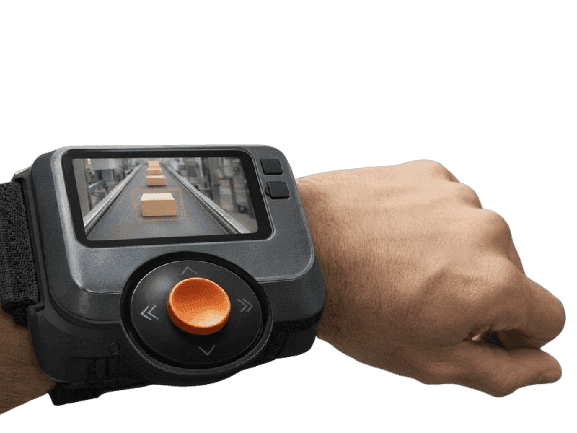
In addition, I built a custom wearable device for the head operator. The wrist controller receives alerts through a radio-frequency module and shows warnings on a small screen. This allows fast reaction without constantly watching a monitor.
The result
The company received a real-time quality control system that:
Detects defects automatically
Reduces material waste
Provides faster reaction time
Improves production stability
Gives visual insight through heat maps
Sends direct alerts to operators and office staff
The system replaced manual defect observation with reliable automated monitoring.
System type :
Computer vision • Automation • Remote monitoring
Role :
Defect Annotation • Alerting & Communication Logic • Implementation • Deployment
Related cases
Clear architecture and opeerational impact. Discover how intelligent systems improve efficiency, visibility and decision-making across industries.
Key features
Real-time detection of PVC surface defects
Custom defect annotation and classification
Spatial heat maps for defect origin analysis
AI-based secondary validation to reduce false alarms
Local network deployment with remote office access
Wearable operator alert device using RF communication
Immediate visual and notification-based warnings
Tags :
Computer Vision,Industrial,Automation,Quality Control,Defect Detection,Edge Monitoring,Wireless Alert System
